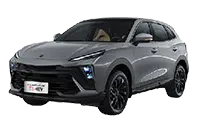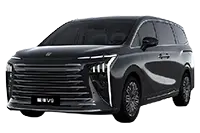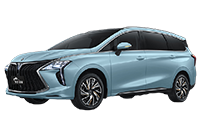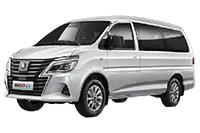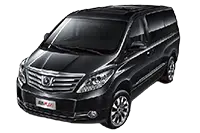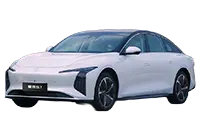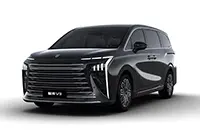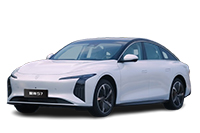
China has become a serious source of Hybrid Automatic Cars for global buyers. Its manufacturers now offer compact sedans, family SUVs, and plug-in models for different driving conditions. Some combine quiet electric assistance with efficient petrol engines. Others provide longer electric range for urban commuting.
Choosing the “best” model is not simple. A vehicle that performs well in Shanghai traffic may feel less suitable on European motorways or African rural roads. Buyers should examine official specifications, independent safety tests, battery warranties, and local service coverage. A polished dashboard means little if replacement parts take months to arrive. Check the details.
This guide evaluates China’s leading hybrid automatic options through a practical, international lens. It considers fuel economy, electric range, ride comfort, cabin quality, safety equipment, software support, and export availability. It also separates self-charging hybrids from plug-in hybrids, since their ownership needs differ greatly. A home charger may be useful for one buyer and unnecessary for another.
Real ownership experience matters. A test drive on uneven streets can reveal suspension weaknesses that brochures rarely mention. A short conversation with local owners may expose delays in software updates or servicing. Not every Chinese model has proven long-term reliability in every market. That uncertainty deserves honest attention.
Readers will find a balanced starting point rather than a careless ranking. Prices, regulations, taxes, and warranty terms change by country. Verify every detail with an authorized dealer before committing. The strongest choice is not always the newest car, but the one supported after purchase.
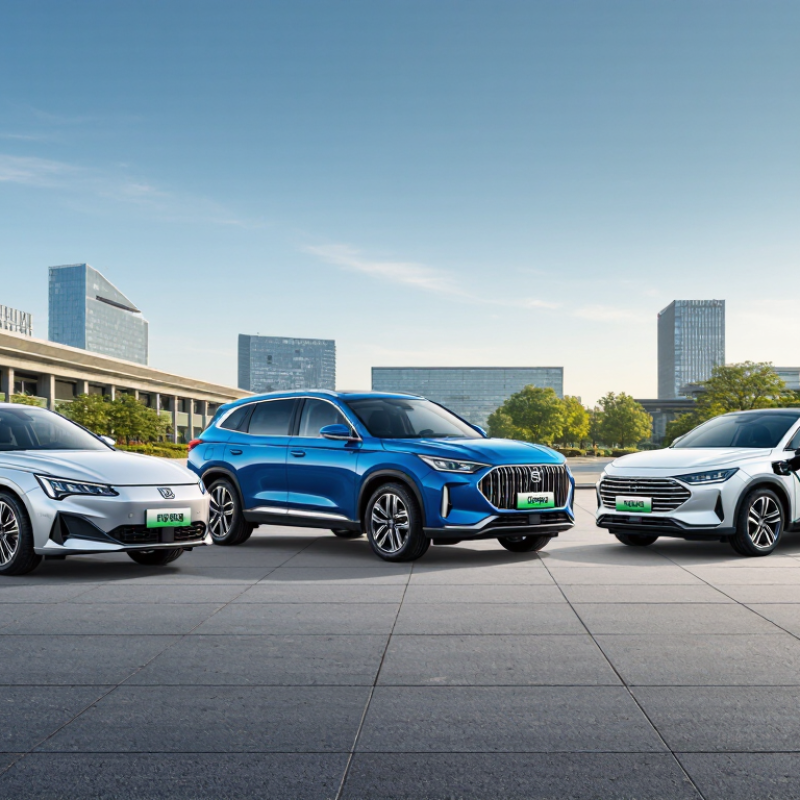
A hybrid automatic car combines an internal-combustion engine, an electric motor, and a battery. The automatic system manages these power sources without requiring a clutch pedal. In city traffic, the motor may move the car quietly for short distances. During acceleration, both systems can work together. Regenerative braking sends some energy back to the battery.
For global buyers, “hybrid automatic” means more than smooth gear changes. It also describes how the car responds to different roads, climates, and driving habits. A non-plug-in hybrid recharges while driving, so it does not require a home charger. A plug-in hybrid accepts external charging and may provide longer electric driving. Buyers should check local fuel quality, charging access, service coverage, and warranty conditions before purchasing.
Real driving results can differ from laboratory figures. Heavy traffic may improve hybrid efficiency, while high-speed motorway travel can reduce the advantage. Cold weather can lower battery performance, and steep roads may increase fuel use. I have found that a quiet electric launch feels refined, but the transition to engine power is not always perfectly smooth. Small delays can appear when the battery is nearly empty. That detail is easy to overlook. A reliable choice depends on verified safety testing, transparent maintenance costs, available technical support, and parts supply in the buyer’s region.
What Defines a Hybrid Automatic Car for Global Buyers
Hybrid automatic cars combine an internal-combustion engine, electric motor assistance, and automated power delivery. Mild hybrids generally cannot drive independently on electric power, full hybrids can provide short low-speed electric driving, while plug-in hybrids typically offer a substantially longer electric-only range and require external charging.
The figures show representative electric-only driving capability by hybrid system type. Actual results vary by vehicle design, battery size, climate, driving conditions, and test cycle.
China’s hybrid automatic cars combine an engine, electric motor, battery, and electronic control unit. A parallel system can drive the wheels through both sources. A series system uses the engine mainly as a generator. Some dual-mode systems switch between these paths through clutches and fixed gears. They are not all conventional CVTs. Many use planetary gearsets, while others use dedicated hybrid transmissions with several operating modes.
At low speed, the electric motor usually moves the car first. The engine starts when battery power falls, acceleration increases, or cabin heating demands more energy. During braking, the motor works as a generator and recovers part of the vehicle’s kinetic energy. The control software blends regenerative and hydraulic braking. The pedal can feel natural, but calibration differs across markets. Smooth, but not silent.
The International Energy Agency reported that China represented more than 60% of global electric car sales in 2023. This figure includes battery-electric and plug-in hybrid vehicles, so it should not be treated as a pure hybrid statistic. Still, it shows the scale of China’s electrified powertrain experience. The ICCT has repeatedly found that real-world fuel consumption can exceed laboratory figures. Weather, traffic, tire pressure, and charging habits matter. A hybrid may perform brilliantly in city traffic, yet deliver less benefit on long motorway trips. Global buyers should examine battery warranty terms, cold-weather control, automatic gearbox behavior, and local service capability. Specifications alone are not enough.
| Hybrid System Type | How Power Reaches the Wheels | Automatic Mechanism | Typical Battery Capacity | External Charging | Typical EV-Only Capability | Main Efficiency Advantage | Best Use Case for Global Buyers |
|---|---|---|---|---|---|---|---|
| 48-Volt Mild Hybrid | The combustion engine remains the primary source of propulsion. A belt-driven or integrated motor assists during launch and acceleration. | Usually paired with a conventional automatic transmission, dual-clutch transmission, or continuously variable transmission. | Approximately 0.5–1.5 kWh | No | Normally no sustained electric driving; engine-off coasting may be available. | Reduces restart, low-speed, and accessory loads without requiring a large battery. | Buyers seeking a familiar automatic car with modest fuel-saving benefits and no charging routine. |
| Full Hybrid with Power-Split Drive | An engine, traction motor, generator, and planetary gearset can combine or separate engine and electric power. | An electronically controlled power-split transmission, commonly marketed as an e-CVT. It does not use stepped gear changes in the conventional sense. | Approximately 1–2 kWh | No | Usually short, low-speed electric operation; duration depends on battery state, temperature, and driving load. | Recovers braking energy and allows the engine to operate near efficient load points. | Urban and mixed driving where frequent braking and low-speed operation improve energy recovery. |
| Parallel Hybrid with Dedicated Hybrid Transmission | The engine and one or more electric motors can drive the wheels separately or together through a multi-speed hybrid gearbox. | A dedicated hybrid transmission, often using two or more fixed gear ratios and electronically controlled clutches. | Approximately 1–2.5 kWh | No | Short electric launches or low-speed operation may be possible, subject to system conditions. | Multi-speed gearing can support strong acceleration and efficient cruising across a broad speed range. | Drivers who want responsive performance, highway capability, and conventional gear-shift characteristics. |
| Series Hybrid | The electric traction motor drives the wheels. The combustion engine operates mainly as a generator and is not mechanically connected to the wheels. | Single-speed electric reduction gear; there is no traditional multi-speed automatic gearbox. | Approximately 1–3 kWh in non-plug-in configurations | Usually no | Electric driving feel is continuous, but engine operation may begin when the battery needs energy. | Provides direct electric-motor control of the wheels and avoids many conventional gear changes. | Stop-and-go traffic and buyers who prefer smooth electric-style acceleration without depending on public charging. |
| Plug-In Hybrid | Depending on the design, the engine, electric motor, or both can propel the vehicle. Larger batteries supply most energy for short daily trips. | May use an e-CVT, dedicated hybrid transmission, multi-speed automatic, or single-speed electric drive. | Approximately 10–30 kWh | Yes | Commonly about 40–120 km under laboratory-rated conditions; real-world range varies with speed, temperature, and heating or air-conditioning use. | Can replace petrol or diesel energy with grid electricity for routine commuting. | Homes or workplaces with dependable charging and drivers who complete many short daily journeys. |
| Battery-Dominant Extended-Range Hybrid | The electric motor normally drives the wheels, while a combustion engine provides additional electricity when battery energy is low. Some systems can also mechanically connect the engine at higher speeds. | Usually a single-speed electric reduction gear, with an additional clutch or gear path in systems that permit mechanical engine drive. | Approximately 20–50 kWh | Yes | Often about 100–300 km under laboratory-rated conditions, depending on battery size and vehicle mass. | Combines an electric driving experience with an engine-based backup for longer journeys. | Regions with developing charging networks or buyers who require long-distance flexibility. |
China Best Hybrid Automatic Cars for Global Buyers?
Chinese hybrid models now cover distinct driving needs, rather than one universal formula. The International Energy Agency reported nearly 14 million electric car sales worldwide in 2023. China represented almost 60% of that market. Its plug-in hybrid sales also grew by about 85%, according to the IEA’s Global EV Outlook 2024. These figures show strong demand, but buyers still need careful selection.
For dense cities, compact self-charging hybrids suit short trips, traffic lights, and limited parking. Their automatic systems often use e-CVT technology, which delivers smooth acceleration without frequent gear changes. Daily fuel savings depend on traffic, temperature, and driving habits. The numbers are not magic. A midsize plug-in hybrid fits commuters with home charging and regular urban travel. A larger battery can cover many daily journeys electrically, while the engine supports longer routes.
For families and intercity drivers, hybrid SUVs offer extra luggage space and stronger highway comfort. Some use dual-motor all-wheel drive, helping on wet roads or steep rural routes. Independent testing still matters. The China Automotive Technology and Research Center and Euro NCAP highlight differences in crash protection, battery safety, and driver assistance performance. Buyers should check charging standards, warranty coverage, local servicing, and winter-range behavior. Cold weather can reduce electric efficiency noticeably. That detail is easy to miss. One weakness remains: unfamiliar software and inconsistent service support may frustrate overseas owners, even when the powertrain feels refined.
For global buyers, a strong hybrid automatic car must balance safety, efficiency, comfort, and technology. Fuel economy matters most in crowded cities, where frequent braking allows regenerative systems to recover energy. The International Energy Agency reports that hybrid adoption is rising as buyers seek lower fuel use without depending entirely on charging access. However, real results vary with temperature, traffic, luggage, and driving style. Test it locally.
Safety deserves closer attention than glossy screens. The Insurance Institute for Highway Safety found that forward collision warning with automatic emergency braking can reduce rear-end crashes by about 50%. Look for reliable lane support, clear camera views, strong night lighting, and easy-to-reach controls. Euro NCAP’s recent testing also places greater emphasis on driver assistance performance and occupant protection. More technology is not always safer.
Comfort includes quiet electric launches, supportive seats, smooth braking, and predictable automatic response. Consumer Reports’ 2024 reliability survey found that conventional hybrids reported fewer problems, on average, than petrol-only vehicles, although individual models still differ. Cabin software should be quick and simple. Some systems remain distracting. Check rear-seat space, boot capacity, warranty coverage, and repair availability before choosing. Efficiency can impress on paper, yet poor local servicing may matter more over five years.
Import Rules, Ownership Costs, and After-Sales Support Worldwide
Choosing a hybrid automatic car for international use requires more than comparing advertised prices. Import eligibility comes first. Check homologation, emissions certification, steering position, lighting, and crash documentation with the destination authority. Tariffs, port charges, inspection fees, and registration taxes can change the final bill sharply. Rules also differ for battery labeling and warranty transfer. The IEA’s Global EV Outlook 2024 reported more than 14 million electric car sales in 2023, showing accelerating electrification. That momentum does not create one global import standard.
Deloitte’s 2024 Global Automotive Consumer Study identifies purchase price and running costs as persistent consumer concerns. Hybrid fuel savings depend on traffic, climate, fuel quality, and battery condition. Ask for a three-year estimate covering fuel, insurance, servicing, tires, taxes, and depreciation. Regenerative braking may reduce pad wear, but battery or inverter repairs can be costly. Independent inspection matters. Request cold-start behavior, battery health readings, and a written service schedule. Those readings are not perfect. Still, they expose risks hidden by a polished cabin.
After-sales support is often the weakest link in cross-border ownership. Confirm local technicians can access approved diagnostic software and replacement parts. Ask how long common components take to arrive. One week is manageable. Several months is not. Warranty coverage may exclude parallel imports, labor, or high-voltage components. Written terms beat verbal assurances. Deloitte’s research also shows that service expectations influence purchase confidence, although its findings cannot represent every country. I may be too cautious, but support should be priced before purchase.