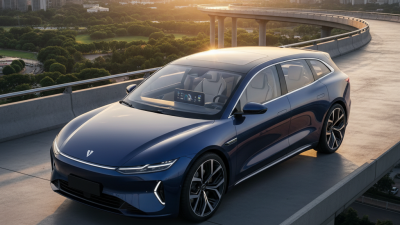
How to Choose the Right Electric Car for Your Needs?
Choosing the right electric car can be challenging. The market is growing rapidly. Many options exist, and each car has unique features. Electric cars offer benefits like lower emissions and reduced fuel costs. However, different needs require different solutions.
Consider your daily commute. A compact electric car may suit urban drivers. Longer journeys need more robust options. Battery range is crucial. Some electric cars can travel over 300 miles on a single charge, while others offer less. Evaluate charging infrastructure too. Fast chargers are essential for road trips.
Research is key. Look for reliable reviews and expert opinions. Understand what works for you. Prioritize range, size, and cost. A car that fits one person's needs may not fit another's. Electric cars represent a shift in transportation. Identify what matters most to you before making a decision.
Understanding Your Driving Needs and Habits
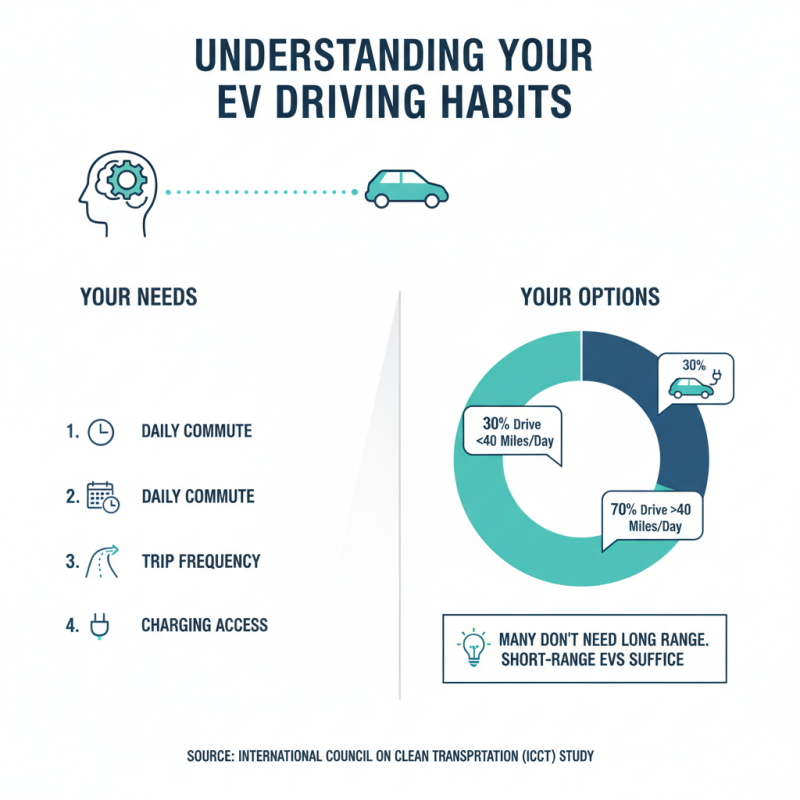
When selecting the right electric car, understanding your driving needs is crucial. Many drivers underestimate how their habits impact their choice. For instance, a study by the International Council on Clean Transportation found that 30% of electric vehicle (EV) owners rarely drive more than 40 miles daily. This data suggests that many may not need long-range options, as short-range EVs can adequately serve their needs.
Consider your daily commutes. Are they consistently over 100 miles? If so, a long-range vehicle is essential. However, for urban drivers, a compact EV with a range of around 150 miles may suffice. Current statistics indicate that about 70% of EV owners recharge at home, highlighting the importance of reliable charging infrastructure. A home charging station can simplify your routine, allowing you to start each day with a full battery.
Reflect on additional factors like charging time and infrastructure. Charging at public stations can take longer than anticipated, impacting your plans. Some consumers find that a lack of nearby charging stations leads to anxiety about running out of power. It's essential to evaluate not just your current habits, but also potential changes in lifestyle. Recognizing these factors enables you to make a more informed and satisfying choice.
Evaluating Electric Vehicle Range and Battery Life
When evaluating electric vehicles, range and battery life stand out as critical factors. Current industry reports indicate that the average electric car offers a range of about 250 to 300 miles on a full charge. However, many drivers may not need such extensive range. Some commuters may find that 150 miles is sufficient for daily use. Identifying your driving patterns can significantly influence your decision.
Battery life is equally vital. Most electric car batteries are designed to last between 8 to 15 years. It’s essential to consider battery degradation over time, which can reduce range. One study highlighted that battery capacity could decrease by 20% after 5 years of moderate use. This decline can alter your driving experience and costs in the long term.
Understanding charging infrastructure is essential as well. While many households can install a charger, public charging stations can vary significantly by location. Data reveals that urban areas generally have better access to charging facilities. Rural drivers may face challenges that urban drivers do not. Evaluating your local charging options can help prevent potential inconvenience and ensure the chosen vehicle suits your lifestyle.
Exploring Charging Options and Infrastructure
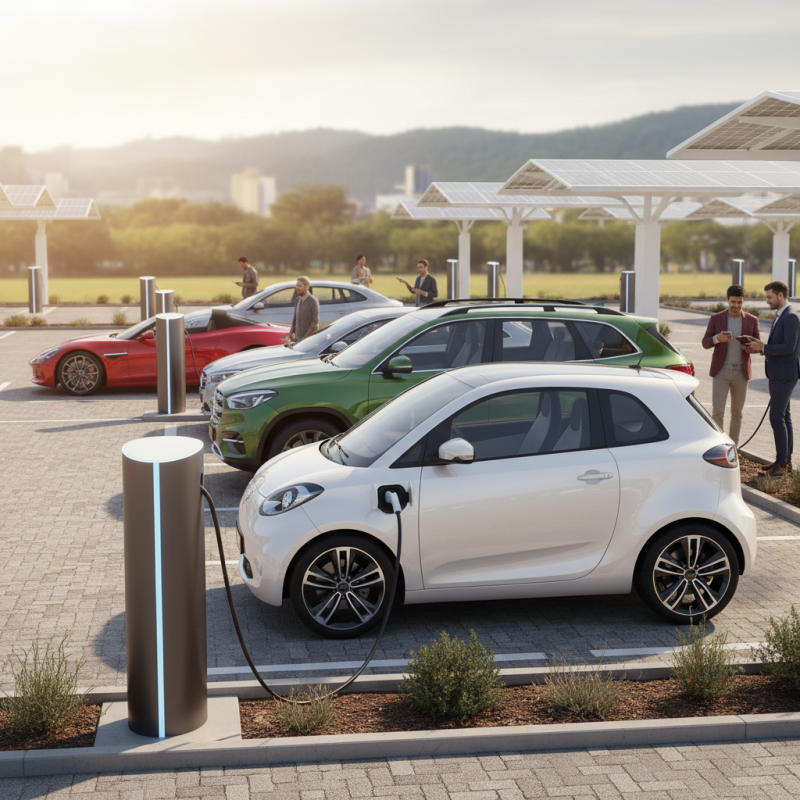
When selecting an electric car, consider the charging options available to you. Charging infrastructure varies significantly across regions. Some areas have extensive charging networks, while others may lack basic facilities. You need to assess your locality and commute patterns. Charging speed can also differ. Fast chargers are ideal for road trips, while home charging suits daily routines.
**Tip:** Research local charging stations before purchasing. Use apps that can map out charging locations. This can help you avoid unexpected delays.
Another critical factor is the type of home charging setup required. Level 1 chargers are standard wall outlets, but they take longer to charge your vehicle. Level 2 chargers are faster but may require installation. Check your home’s electrical capacity before deciding on a type.
**Tip:** Consult with an electrician if you are unsure about electrical upgrades. Proper installation ensures safety and efficiency.
It's hard to predict evolving charging solutions. New technologies emerge frequently, making it essential to stay informed. Reading reviews and expert opinions can guide your choices. However, be mindful; not all information is reliable. Balancing personal needs with infrastructure realities can lead to more informed decisions.
How to Choose the Right Electric Car for Your Needs? - Exploring Charging Options and Infrastructure
| Model |
Range (Miles) |
Charging Time (Home) |
Fast Charging (DC) |
Battery Warranty (Years) |
Starting Price ($) |
| Compact EV |
250 |
8 hours |
30 mins |
8 |
30,000 |
| SUV EV |
300 |
10 hours |
40 mins |
8 |
40,000 |
| Luxury EV |
350 |
9 hours |
25 mins |
10 |
70,000 |
| Sports EV |
400 |
6 hours |
20 mins |
5 |
100,000 |
| Family EV |
280 |
7 hours |
35 mins |
8 |
45,000 |
Considering Budget, Incentives, and Resale Value
When choosing an electric car, budget plays a crucial role. The average price of electric vehicles (EVs) has been around $56,000 in 2023, according to recent industry reports. However, many buyers overlook initial costs versus long-term savings. Operating an EV often costs significantly less than gasoline vehicles. For instance, charging an EV can be 60% cheaper than refueling a traditional car.
Incentives can greatly affect your decision. Federal tax credits in the U.S. provide up to $7,500 off your purchase. Many states offer additional rebates or grants. This can substantially lower the effective price of an EV, making it more appealing. Research shows that 40% of buyers consider incentives before purchasing.
Resale value is another important aspect. Some models depreciate faster than others. Data indicates that EVs can lose up to 50% of their value in the first three years. Factors like battery life and technology updates influence this. It's vital to research specific models to understand their long-term value. Balancing budget, incentives, and resale can be challenging yet essential for informed decisions.
Assessing Technology Features and Safety Ratings
When selecting an electric car, technology features and safety ratings should be a priority. Notable advancements in battery technology, such as lithium-ion and solid-state batteries, offer improved range and efficiency. According to the U.S. Department of Energy, many modern electric vehicles (EVs) can achieve over 300 miles on a single charge. This is a significant consideration for daily commuting and road trips alike.
Safety ratings are equally important. The National Highway Traffic Safety Administration (NHTSA) rates vehicles based on crash test results. Many electric cars score above average in safety assessments. However, there are varying levels of crash worthiness among models. Some EVs may have advanced driver-assistance systems (ADAS) that aid in preventing accidents. Yet, challenges remain in standardizing these technologies across different manufacturers.
While technology features and safety are critical, personal needs still matter. Battery life, charging infrastructure, and driving habits play roles in your decision-making process. Electric cars can be costly, and the market is evolving rapidly. A vehicle that meets your needs now might not be suitable in a few years. Therefore, careful thought and research are essential in making the right choice.
Electric Car Technology Features and Safety Ratings

 T5EVO
T5EVO T5L
T5L T5
T5 Friday
 T5 HEV
 V9
V9 UTOUR (M4)
 M5 EV
M5 EV M5
M5 Lingzhi Plus
 S7
S7 V9 HEV
 S7
S7 6X4 H7 Tractor
 6X4 H5 Tractor
 6X4 HK Tractor
 4X2 H7 Tractor
 4X2 H5Tractor
 4X2 H5 Cargo Truck
 4X2 M3 Cargo Truck
 4X2 L2 Cargo Truck
 6X4 H7 Dump Truck
 6X4 H5 Dump Truck
 4X2 H5 Dump Truck
 4X2 M3 Dump Truck
 Light Truck L2
 Light Truck L2 EV
 H7 Refrigeratior Truck
 H5 Mixer Truck
 M3 Tank Truck
 M3 Sanitation Truck
 6X4 H7 Electric Truck
 4X2 H5V Electric Truck
 4X2 L2 Electric Truck