How to Understand Forthing China and Its Impact on Global Trade?
Forthing China is becoming a significant force in global trade. Its rapid expansion has captured the attention of industry experts. Dr. Wang Li, an esteemed economist, emphasizes, "Forthing China represents a new paradigm in trade dynamics." This statement highlights the transformative nature of this emerging market.
Forthing China's influence is evident across various sectors. It fosters innovation, competitive pricing, and new trade routes. At the same time, businesses must navigate challenges. Regulatory changes and market volatility can disrupt established practices. Companies must adapt to thrive in this dynamic landscape.
Understanding Forthing China requires a keen analysis of both opportunities and risks. As global trade evolves, the implications of Forthing China will shape future economic interactions. Stakeholders should remain vigilant, engaging with the experts to glean insights. The journey ahead may be complex, but the potential rewards are substantial.

Understanding the Concept of "Forthing" in China
"Forthing" in China represents a significant shift in economic and cultural dynamics. It blends innovation with tradition, pushing boundaries in trade. This concept emphasizes stronger local production and sustainable practices, reflecting a deeper understanding of global supply chains. It affects not just China, but economies worldwide.
China's approach to "Forthing" involves enhancing local capabilities. It prioritizes resource efficiency and environmental responsibility. Businesses are encouraged to adapt and innovate, aligning with global trends. This can lead to both challenges and opportunities for foreign companies engaging in trade with China. Adapting to these changes might reshape competition in the market.
While the benefits are evident, challenges exist. The transition may cause disruptions. Companies must navigate new regulations and consumer expectations. Not every organization may grasp these complexities quickly. Therefore, ongoing education and adapting strategies are crucial. Understanding "Forthing" requires constant engagement and reflection.
Historical Context: The Evolution of Trade Policies in China
The historical context of trade policies in China reveals a complex evolution. In the late 20th century, economic reforms led to China's integration into the global market. The country's foreign trade volume surged remarkably, rising from $20 billion in 1978 to over $4 trillion in 2020. This growth transformed China into the largest goods exporter worldwide, impacting global supply chains profoundly.
China’s trade policies have shifted from protectionist measures to a more open approach. The accession to the WTO in 2001 marked a significant milestone. Reports indicate that China's trade with the world grew by 280% in the following decade. However, this rapid expansion came with challenges. Many industries faced competition, leading to debates about unfair trade practices and intellectual property theft. These issues prompted countries to reconsider their trade relations with China.
Today, China's Belt and Road Initiative illustrates its ambition to strengthen trade networks. However, analysis shows varying levels of success and criticism from participating nations. While increased infrastructure investment is evident, critics question the long-term sustainability of these projects. Understanding these trade dynamics is vital for predicting China's future role in global commerce.
Understanding Forthing China and Its Impact on Global Trade
The Economic Implications of Forthing on Global Markets
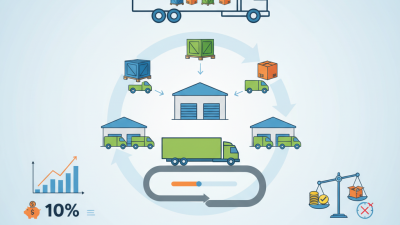
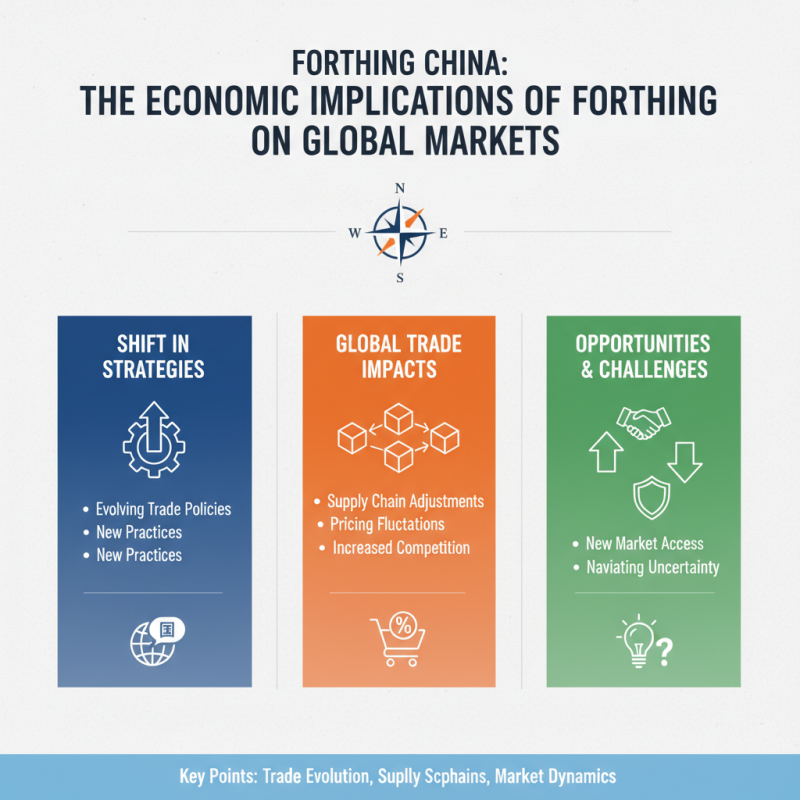
Forthing China represents a notable shift in economic strategies, impacting global trade dynamics significantly. As China evolves, so do its trade policies and practices. This creates opportunities and challenges for international markets. The rise of Forthing influences how goods circulate globally. It affects supply chains, pricing, and competition across various industries.
Market analysts suggest that companies adapt quickly to these changes. Understanding local regulations is crucial. Engaging with Chinese businesses can reveal insights. This proactive approach will help navigate the complexities of Forthing. Firms must also anticipate shifts in consumer behavior, driven by changing economic landscapes.
When considering Forthing China, remember these tips: diversify suppliers to mitigate risks. Establish strong communication lines for transparency. Monitor trends closely to stay prepared. Forthing may lead to uncertainty, but it can also inspire innovation if managed well. As global markets evolve, businesses must remain agile to seize emerging opportunities and address potential drawbacks.
Comparative Analysis: Forthing China versus Other Trade Models
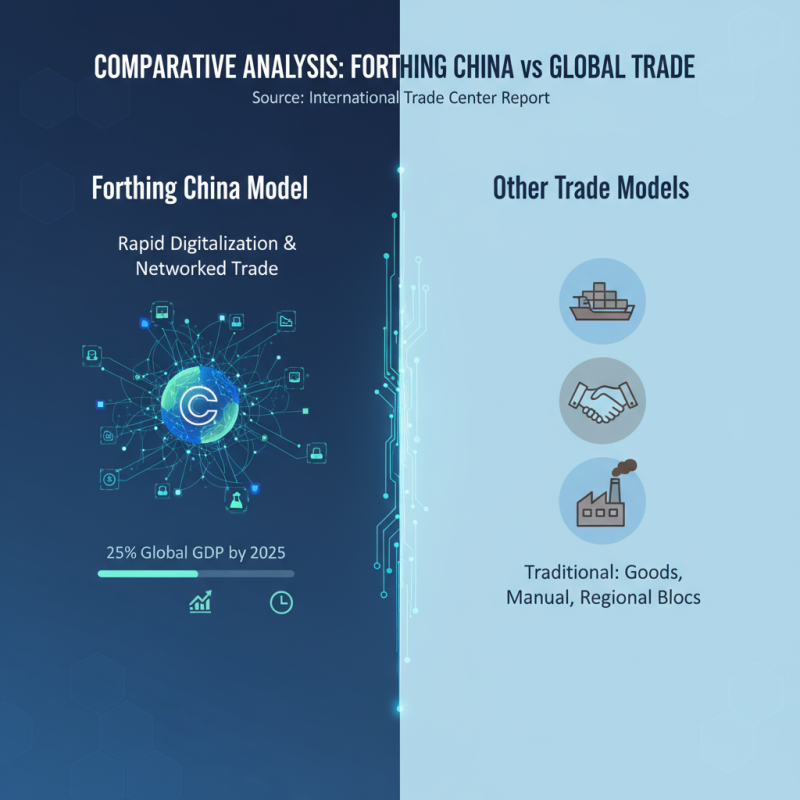
Forthing China represents a unique model within global trade. It emphasizes rapid digitalization and networked trade systems. According to a report by the International Trade Center, digital trade could account for 25% of global GDP by 2025. This prediction highlights the shift towards a more integrated and digital economy.
In comparison, traditional trade models focus heavily on physical goods and established networks. Forthing China breaks this mold. It integrates logistics, e-commerce, and finance into one streamlined process. For instance, a significant portion of transactions now occur online. This shift has led to an increase in efficiency but also poses challenges. It raises questions about cybersecurity and the reliance on digital systems.
Furthermore, Forthing China's rapid growth has implications for other economies. Countries that lag in digital adaptation may face economic disadvantages. A report from McKinsey indicates that firms embracing digital trends grow 20% faster than their competitors. While this presents opportunities, it also creates a divide. Not all nations have the same access to technology. This creates a reflection point on the need for equitable access to digital infrastructure.
Future Trends: Predicting the Impact of Forthing on International Trade
The emergence of "Forthing" China is reshaping global trade dynamics.
This concept reflects China's shift towards a more state-controlled economy.
As reported by the World Trade Organization, China's share of global exports reached 13.2% in 2022.
This is a clear indicator of its growing influence.
Forthing practices may drive businesses to rethink their supply chains.
Research from McKinsey & Company suggests that 75% of global supply chains may need redesigning.
This is due to shifts in trade regulations and tariffs that Forthing might bring.
Companies are expected to adapt quickly to remain competitive.
Impacts may not all be positive.
There is concern about increased trade friction.
Companies could face higher costs and market access challenges.
According to the International Monetary Fund, global GDP growth may slow down by -0.5% if tensions escalate further.
Reflecting on these challenges, businesses must prepare for uncertainty in their operating environments.

 T5EVO
T5EVO T5L
T5L T5
T5 Friday
 T5 HEV
 V9
V9 UTOUR (M4)
 M5 EV
M5 EV M5
M5 Lingzhi Plus
 S7
S7 V9 HEV
 S7
S7 6X4 H7 Tractor
 6X4 H5 Tractor
 6X4 HK Tractor
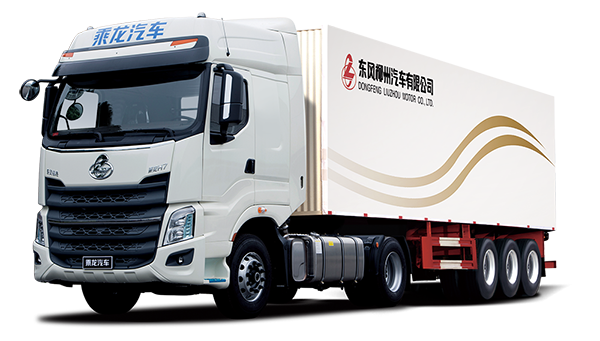 4X2 H7 Tractor
 4X2 H5Tractor
 4X2 H5 Cargo Truck
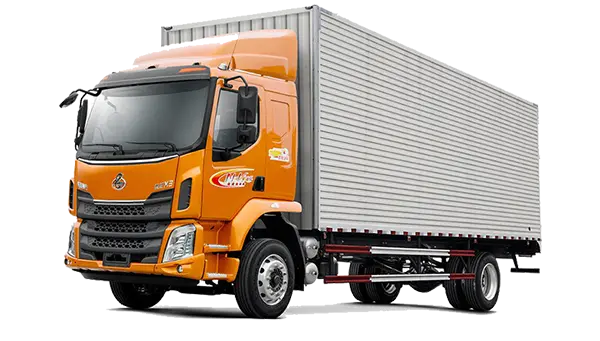 4X2 M3 Cargo Truck
 4X2 L2 Cargo Truck
 6X4 H7 Dump Truck
 6X4 H5 Dump Truck
 4X2 H5 Dump Truck
 4X2 M3 Dump Truck
 Light Truck L2
 Light Truck L2 EV
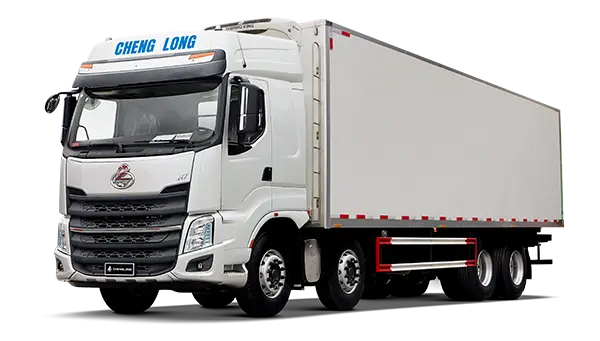 H7 Refrigeratior Truck
 H5 Mixer Truck
 M3 Tank Truck
 M3 Sanitation Truck
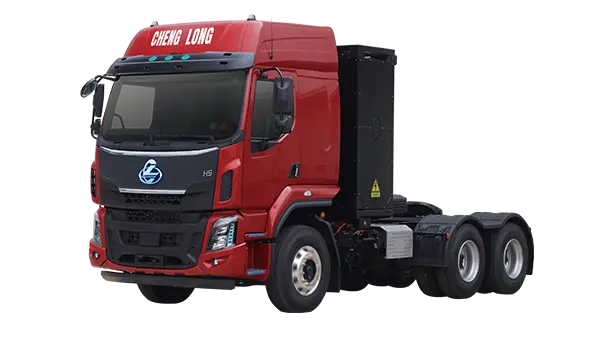 6X4 H7 Electric Truck
 4X2 H5V Electric Truck
 4X2 L2 Electric Truck